Best Business Loans for Tech Companies in the US (2026 Guide to Fast Startup Funding)
Discover the top business loans for US tech companies. Compare SBA loans, startup financing, working capital lines of credit, and fast funding options for growth.

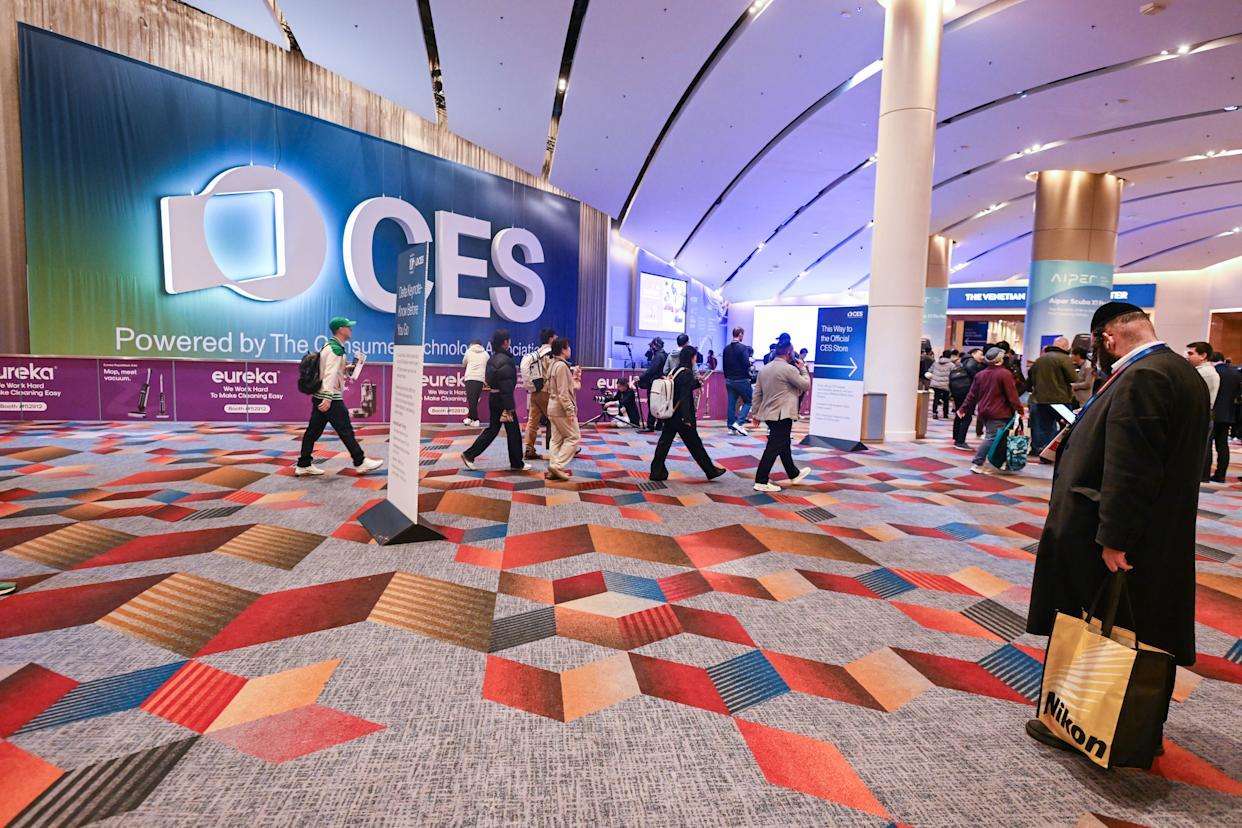
An expert breakdown of CES 2026, exploring how robotics, intelligent devices, and next‑gen computing are shaping technology and professional workflows in 2026.
CES, the Consumer Electronics Show, has long been the annual barometer for where technology is headed. In early January 2026, thousands gathered in Las Vegas not to witness incremental upgrades, but to absorb a deeper shift in the way technology intersects with daily life, work, and industry. This year, the show did not lean on spectacle alone. The narrative gravitated toward how foundational tech forces are reshaping what devices, platforms, and systems can actually do in the real world.
Beneath the buzz and product reveals lies a more meaningful question for professionals and creators alike: Is CES 2026 the year tech moves from novelty to a tangible layer of human infrastructure? Answers are emerging not from flashy demos alone, but from the patterns in innovation, investment, and integration on display throughout the event.
Table of contents [Show]
One of the most noteworthy threads running through CES 2026 is the concept of what some industry leaders are calling physical intelligence. It was made visible early in the show when Nvidia’s keynote emphasized models trained in simulated real environments, which can then be deployed into physical systems that respond to real physics and tasks. That shift makes artificial intelligence something that does not just live on screens or in cloud services, but inhabits devices with purpose and real world agency. (PBS)
Nvidia is taking the notion seriously, showcasing new chips and frameworks designed to power autonomous vehicles, industrial systems, and robotics. Their expanded collaboration with Siemens to build integrated industrial AI operating systems makes clear that the aim is not about incremental performance upgrades. It is about embedding intelligence into complex workflows that matter for production, logistics, and manufacturing at scale. (TechRepublic)
This momentum matters because it shifts CES away from gadget showcases toward a clearer signal of where enterprise and infrastructure tech are heading. We are entering a moment where hardware and software are not separate entities, but parts of a unified system.
Even as deeper infrastructure themes surfaced, consumer hardware at the show began to reflect practical evolution rather than novelty.
Take foldable phones, for example. Motorola revealed its Razr Fold, a book‑style foldable that blends portability with expanded utility, bridging the gap between phone and tablet in a form that feels less like a prototype and more like a usable device. (WIRED) Similarly, Samsung’s TriFold device pushes the envelope of display design with a three‑panel unfolding experience that expands real estate without abandoning transportability. (The Australian)
These are not incremental screen tweaks. They signal that consumer devices are being designed for new behaviors: multitasking, immersive content, and flexible workflows that adapt to context. For founders and creators, these shifts foreshadow how the next generation of devices will influence interaction design and content creation workflows.
Televisions and displays, long a staple of CES, also reflected deeper trends. Hisense’s new RGB mini‑LED and RGBY MicroLED technologies aim for colour reproduction and viewing quality that challenge traditional OLED limits, while LG’s cloud gaming enabled 4K 120Hz sets hint at how gaming and streaming experiences will merge across devices. (TechRadar)
Robotics has a long history of theatrical demos at CES. This year, the difference was a growing focus on functionality rather than spectacle. LG’s CLOiD robot, which can tackle household tasks, and Boston Dynamics’ Atlas humanoid prototype, targeted for industrial deployment by 2028, are more than curiosities. They point toward robotics that augment human labor in meaningful ways. (New York Post)
This convergence of robotics with AI models that understand environment, objects, and intent is arguably the most significant development at CES 2026. Devices are moving from pre‑programmed sequences to systems that can perceive and respond with degrees of autonomy. Boston Dynamics’ partnership with Allied companies to embed foundation models into Atlas and other platforms illustrates how robot interaction is evolving from scripted demonstrations to adaptive behavior in real environments. (Yahoo Tech)
For technologists in enterprise fields, the downstream implications are profound: robots that can adapt to variable tasks without constant human supervision reduce training overhead and make automation more feasible in sectors that have resisted it due to complexity or cost.
A recurring theme across exhibitors was that artificial intelligence is no longer an add‑on feature. It is being embedded at every layer of the stack. Samsung, for example, emphasized AI companions woven into everyday appliances, framing intelligence as an ambient layer across devices, not a flashy feature label. (Forbes)
The push toward edge computing and local processing, highlighted by chip makers like Intel with its new Core Ultra Series 3 Panther Lake processors, underscores how the narrative is shifting from cloud‑centric models to devices that compute, adapt, and act independently of constant connectivity. (The Times of India)
This deep integration matters because it affects the calculus of design, privacy, autonomy, and user experience. Products will no longer be judged simply by their performance specs. They will be evaluated by how seamlessly they integrate into workflows, anticipate needs, and augment human capability.
It would be remiss to portray CES 2026 as purely visionary. There are legitimate critiques and risks that deserve acknowledgment.
First, not all innovations are ready for market. Some devices remain concepts or prototypes without clear timelines for real world deployment. Lenovo’s AI glasses, for example, showcase lightweight design and thoughtful integration, yet questions remain about practicality and user experience beyond the concept stage. (The Verge)
Second, there is the familiar risk of overclaim. As many industry commentators have noted, the pervasive use of “AI” as a buzzword can mask incremental improvements behind impressive marketing language. Not all products that claim intelligence deliver substantive utility beyond superficial convenience. (Reddit)
There is also a deeper philosophical challenge: as technology becomes more integrated and “intelligent,” the criteria for assessing value must evolve. Technical sophistication alone is no longer enough. Real value will be judged by usability, ethical design, and the extent to which these technologies empower users without creating new forms of dependency or opacity.
For founders and creators, CES 2026 offers several practical takeaways that go beyond technical hype.
First, the show signals that hardware innovation is coming back into relevance. After years of stagnation focused on incremental chip speed gains or cosmetic feature updates, this year’s announcements suggest a renewed emphasis on differentiated form factors and use cases. Devices that adapt to human workflows, rather than force human behavior to fit them, will attract attention and investment.
Second, integration at the system level is increasingly important. Partners that can link hardware, software, and intelligence across ecosystems will have an edge. The Nvidia‑Siemens partnership exemplifies this trend, demonstrating how cross‑domain collaboration can create platforms that withstand complexity and scale. (TechRepublic)
Third, the narrative of physical intelligence reminds us that the future of tech will be judged by real world performance. It is not enough for systems to generate output. They must interact sensibly with the physical world, be it autonomous vehicles, service robots, or adaptive consumer devices.
Finally, discernment remains crucial. As enticing as emerging tech can be, the professionals who thrive will be those who separate surface polish from substantive innovation. Not every flash of brilliance at CES equates to market viability. Long term value is built by understanding underlying capabilities, constraints, and user needs.
CES 2026 was not about a single breakthrough product. It was about a collective shift in how the industry thinks about computing, interaction, and autonomy. The event made clear that technology is not merely getting faster or smarter. It is becoming more deeply woven into the fabric of everyday life and industry.
The moment now belongs to those who can translate these trends into meaningful products, services, and systems. The signals from Las Vegas will ripple through design studios, research labs, and boardrooms for months to come. Those who grasp the nuances behind the announcements will be positioned not just to observe change, but to shape it.

Discover the top business loans for US tech companies. Compare SBA loans, startup financing, working capital lines of credit, and fast funding options for growth.
Stop leaking sensitive data to cloud AI. This 2026 guide covers everything you need to deploy private LLMs locally, including hardware specs for RTX 5090 and M4 Ultra, security hardening, and high-performance cloud alternatives.
Is your VPN ready for 2026? As AI tracking and quantum threats evolve, standard encryption is no longer enough. We put the top providers to the test to see which ones actually deliver on privacy, speed, and 8K streaming this year. Here is what we found after 400+ hours of testing on Android 16 and iOS 19
Don't spend $5,000 on hardware yet. Use this link to get $300 in Free Vultr Credit.
Deploy an NVIDIA A100 or H100 in 60 seconds and test your local LLM architecture for zero cost.
CLAIM $300 FREE CREDIT NOW.png)